Navigating change — the Panta Rhei enterprise

This post is a replica of the original home page. (The current home page of the site is simply set to the list of recent posts in reverse chronological order.) Just thought you might be interested what is behind this blog. If you are a regular reader, … it cannot always be about AI 😉
Welcome

Thank you for coming by. Is it the blog that got you interested? Were you googling Panta Rhei? Are you thinking a lot about complexity and change? Have a look ’round and feel free to get in touch.

Chris and Mat started this site and blog in late 2019. We both like writing, and talking, about the complexities and simplicities of life, about working in groups and leadership, and about learning and teaching both in the chaotic and the virtual worlds. We both have years of experience in language and communication, education and training, management and leadership. We wanted to share our ideas, our expertise, and our insight with a wider audience. Worth a try, we thought. A lot has happened since then … Both of us are working full time. And Chris started dedicating his time to narrating audio books. Mat had put more emphasis on my writing per se. Learning new things, joining writing groups and courses, …

So, what is happening here?

Years of learning, reading, listening, experiencing, doing, reflecting, leading, following, smiling, crying, talking, writing, … Then it was time to share, time for this site, time for this blog:

On what they call … Artificial Intelligence

For his PhD, Mat wrote – what he likes to call – a research prototype of a grammar checker for learners of German. He then went on to write several articles and a book about the nexus of language learning and AI. Still, when GenAI fell on all of us, he was surprised by the rapid change and the immense power for a while. Then he began to learn and … write. Most recent blog posts are on the topic in one way or another.

On the complexity of change

Most of nature is complex. Most of society is complex. Human behavior is complex. And, as the cliché has it, the only constant is change. And this change is not linear. Sometimes it seems we soar ahead, sometimes it feels like we walk ’round in circles, and sometimes we are taken for a ride. On a rollercoaster. It is this complexity of change that Mat has been exploring, on which he has been reflecting. One blog post at the time. Thinking about it, reading about it, writing about it, … Learning about Chaos Theory, Complexity Science, and Dynamic Systems Theory, he has been doing for more than 15 years. And if you count dialectic — we are going on forty …

RoLL: Research on language and learning

Mat is paying for his daily bread, his shelter, and for what he considers to be luxuries with language and learning and teaching. So, when he writes about language and learning, it often is also about complexity and change, about technologies and artificial intelligence.

The posts Chris wrote on the BASE model are also still available.

Get in Touch

Look around a bit more. Or why not join the growing group of people who follow the Panta Rhei Blog? [In case you are wondering, the relevant button is in the top-right corner of each page or underneath the text and comment box, if you are reading this on your phone.] If you are unsure about the idea of following, really all it means is that, when something gets posted, you will get an alert, if you are on WordPress, or an email with a link and summary, if you are not.

If you have any comments, suggestions, or questions, comment right on the page or post or send a quick email to mschulze7980@gmail.com. I live and work in Southern California. If you happen to be in the area and would like to meet, again an email is good.

Find the contact details and social media handles on a separate page.

Panta Rhei – everything flows and changes, and so does this site. Come back again to see what changed.

Wishing you a wonderful day.
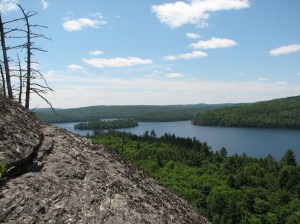
Connected forest lake in Algonquin Park
Algonquin Park, Ontario, Canada

Spring cleaning. Late?

Photo by Andrea Piacquadio on Pexels.com
And done. 
Not gone. 
Everything in its place. 
And the plans laid out.

Hey, Friend,

This blog is about complexity and change, the complexity of change, at times on language, on learning, and on language learning. You knew that, right? That remains so, and I am bringing back two ideas that I tried out on Texterium:

  • Just words: Whenever I have a word that is used when we talk about complexity, change, language, learning, it might be good to play with it, to get to know it better.
  • Backsight: Looking at print, audio, video – again on complexity, change, language, learning – to remember, reflect, and review.

I hope you will enjoy the reading and browsing at least half as much as I enjoy the writing.

Panta Rhei — what does that mean?

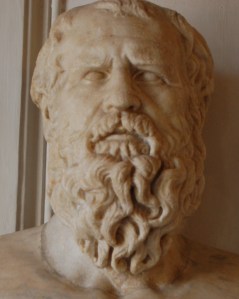
It is Greek, and not just to me. I am told the translation is: Everything Flows. The first one to say this was the Greek philosopher Heraclitus (c. 535 to c. 475 BC). He believed — as do we — that everything always changes, that we can understand ourselves and the world around us better, if we start with the premise of ever-present change. It is that change that we experience as development. Sometimes we are happy with it, sometimes — not so much. Sometimes we like the speed and direction of change, sometimes we don’t.

Bust of an unknown philosopher. This one is in the Hall of Philosophers in the Capitoline Museum in Rome, labeled number 3. One suggestion is that it is Heraclitus, but the museum makes no such assumption.
By RoyFokker - Own work, CC BY-SA 4.0, https://commons.wikimedia.org/w/index.php?curid=10805964
Bust of an unknown philosopher. This one is in the Hall of Philosophers in the Capitoline Museum in Rome, labeled number 3. One suggestion is that it is Heraclitus, but the museum makes no such assumption

Heraclitus was known as the Obscure Philosopher. He apparently enjoyed playing with words, but more importantly, he believed in the unity of opposites and assumed there is some harmony in this world. Today, we capture the unity of opposites — things are plus and minus at the same time — as one part of a dialectic. [More on that in a later blog post.] It is difficult to understand and then express opposites at the same time. Helping somebody is both positive and negative simultaneously and subsequently: it is positive because the helped benefits from the help, it is negative because the help curtails, prevents, or even disables the potential for the helped to act for themselves. We are capable of self-determination — autonomy — and make our own choices; at the same time, we are always also other-determined — heteronymy: we choose to act on our want for a nice meal in a comfortable environment and might go to a restaurant. Quite determined, we hop into the car and drive off downtown. The restaurant owner might have decided to not serve dinner at 2am at night and went to bed already. Our eating habits are also determined by that and by many other decisions and choices many other people made.

So, in large part because of these tensions between opposites, because of different factors bouncing off off each other, changing, amplifying, and cancelling each other, and because of each of us determining to some extent how we are going to act at any given moment, something or other is always happening — everything always changes.

Heraclitus also said: No man ever steps in the same river twice. We use this sentence as the tag line for this site, by only changing one word: No one steps in the same river twice. In our experience and from our perspective, change from the “outside” does affect everybody the same and differently; everybody changes the same and differently—independent of our gender.
Why doesn’t anybody step in the same river twice? The river always flows; one way of looking at it is that it is not the same river water just a second later. And we also change. When we step into the same river (if this were possible), then we are not the same; we are a little older, maybe a little wiser, maybe just a little more hungry, or already wet …

Such constant change is complex in itself, and we often perceive it as such, and, when we are in the midst of it — and we often are — we find it complex and complicated to deal with this change.

We believe it is good to think about the complexity of change, to talk about it, understand it better. We don’t want to simplify change, belittle it, or reject it. Change is all around us and all within us; we might as well understand it better. In some way or another — based on the concepts in our blog post tags — we will always look at change, and not only in our blog writing.