

Over the past decades, those of us interested in computer-assisted language learning have repeatedly seen new technologies arrive with promises to transform language education. From early interactive grammar exercises to multimedia CD-ROMs, from learning management systems to mobile apps, each sparked both excitement and trepidation. Generative artificial intelligence (GenAI), however, is different. The sudden arrival of large language models and their chatbots into everyday life in late 2022 did not just add another teaching and learning tool but set in motion a fundamental change of the environment in which teachers teach and learners learn.
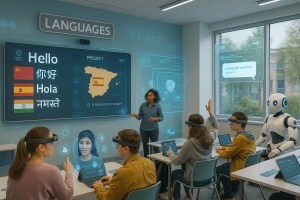
ChatGPT 5 imagined this language classroom in 2033
Public discourses have reflected this sense of rupture. Media headlines made utopian promises – AI as patient tutor, instantaneous translator, or personal coach – or raised dystopian warnings of cheating, job loss, or cultural and cognitive decline. University administrators and school boards scramble to update policies, while journalists speculate about the “death of the essay” or the “end of second-language learning.” These narratives are dramatic, but they miss an important point. They miss what matters to many teachers and students: the daily reality in which they are working with and, at times, against a very complex and powerful technology in their classrooms and in their lives. Teachers must make timely and important decisions: whether and how to allow or ban GenAI use in learning activities and especially in graded assignments; how to talk to students about plagiarism and authorship; how to redesign assessment; and how to build critical AI literacy. In staff rooms, professional development workshops, and teacher networks, conversations are often pragmatic: Which prompts work best for this language-learning activity? How do we prevent overreliance? How do we foreground human interaction, communication, and thinking?
This is a draft of my foreword for a book that has now come out:

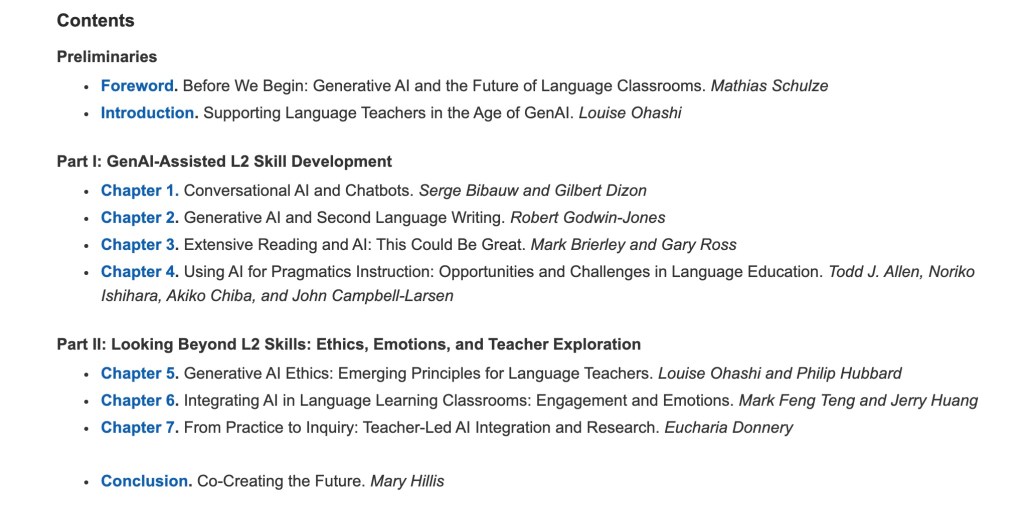
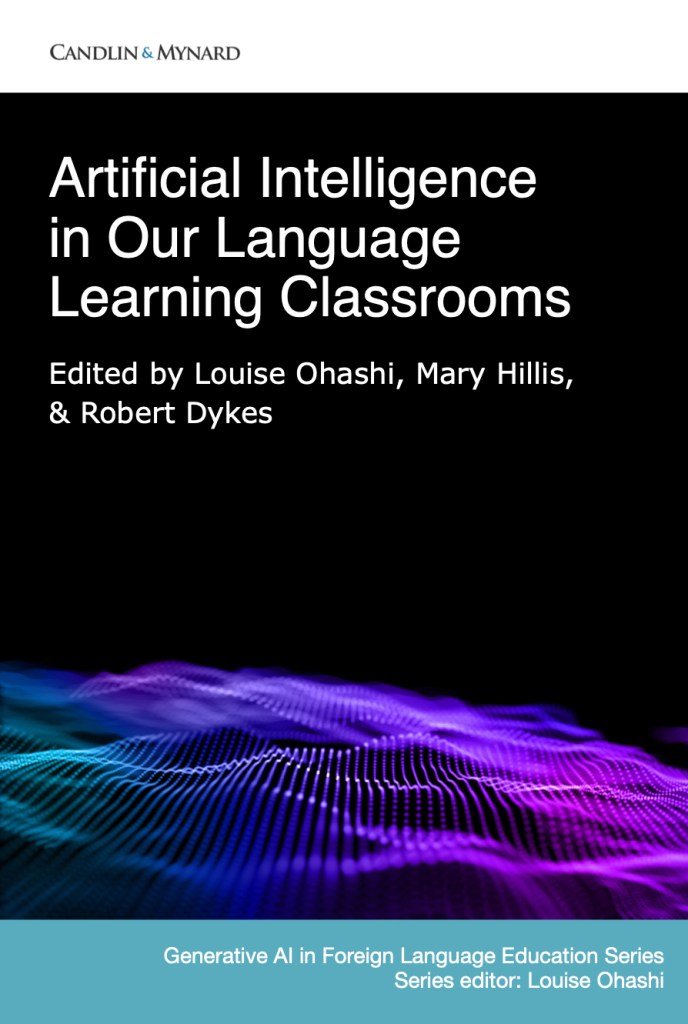
Louise Ohashi, Mary Hillis, & Robert Dykes (Eds.) Artificial intelligence in our language learning classrooms. Candlin & Mynard ePublishing.

https://www.candlinandmynard.com/genai1.html
This book tackles these questions. It does not treat generative AI as an external force to be admired or feared from a distance. Instead, it examines how GenAI is already being used in classrooms and to the benefit of and in collaboration with the students. Its chapters speak to classroom practice, to pedagogy, and to the professional and ethical responsibilities of teachers. From my perspective as someone who has long been interested in the intersection of technology, language, and education, this is precisely what we language teachers need. What matters is whether teachers can integrate these tools without losing sight of the social, cultural, and emotional dimensions of language and of learning.
By grounding the discussion in theory, research, and classroom experience, the book provides what teachers most need: different perspectives, clear guidance, and thoughtful reflection. Within this broad focus, all book chapters foreground teacher agency. Public discourses sometimes frame educators as passive, either as victims of a disruptive technology or as gatekeepers tasked with policing it. In this book, teachers are shown as active participants: experimenting with GenAI in their classrooms, guiding learners in prompt design, encouraging reflection, embedding AI literacy into their pedagogy, … This emphasis is crucial. If GenAI is to have a useful place in language education, it must be under teacher control and be shaped by pedagogical priorities that, in turn, are rooted in both educational principles and technological awareness.
Reading across the chapters, one finds a sense of the broader ecology in which language education now takes place. Generative AI is not an add-on; it reshapes the communicative environment itself. Learners increasingly write, read, and converse in contexts where GenAI is ubiquitous. Teachers, therefore, cannot simply teach “around” AI; they must teach “with” and “about” it. That means equipping students not only to use AI tools effectively, but also to critique them and to understand their both their capabilities and limitations.
As I read this book’s contributions, I was reminded of an important lesson: technology can disrupt pedagogy and education, but it does not determine how and what we teach. It is always teachers, working with learners in real contexts, who determine whether a tool becomes a crutch, a distraction, or a catalyst for learning. This book exemplifies that spirit. It offers new ideas, outlines paths for further inquiry, and sharpens the (empirical and theoretical) lens for teacher reflection. It shows how generative AI can be questioned, adapted, and contextualized rather than either blindly adopted or hastily rejected.
When you read this book, my hope is that you will also come away not only with new ideas for classroom practice, but with renewed confidence in the changing role of teaching and teacher. Generative AI may be unprecedented in its large scope and powerful capabilities, but the fundamental task remains the same: to create environments where students learn to use language meaningfully and comfortably and develop their empathy for other people and peoples, for their customs and cultures. The chapters that follow offer help with this task.

 Panta Rhei Enterprise