Wr*AI*te for me OR Wr*AI*te with me?

What else can it do? Write. Translate. Chat. We know all that. This new AI is All. Powerful.

For writing we have always used tools. When I write – in English – I use tools. I use a thesaurus. I use dictionaries. More than one. One with more than one language. One with one language. English only. Funny that. But it helps. 

When I learned writing …  And it was hard. In grade one. When I learned writing, we had to use a fountain pen. My t-shirt and my tongue were blue. I wrote with a cheap fountain pen, doing my best to stay within the lines. Struggling with the tools. I could not write without them. There were so many lines in my exercise book. So, I was the last kid in class who always needed help to find the pale blue base line for the letters, when I started writing. Then I wrote. Letters first. Words later. Then sentences. Then stories. With a fountain pen. The pen did not write. I would never say that. It would never say that. I — wrote. I had to use the pen. I would have preferred another tool. A ballpoint pen would have been nice. It didn’t spit at the page. It didn’t leak on me.

Years later. I had saved some money and wanted a new toy. I said to myself – and others – a new tool. For writing. My writing would look neater. I could correct the words on the screen. And no one would ever know, if I did not say. The computer wouldn’t. I hit a key and it displayed. I sent in a command, and it printed. I had to wait years for this computer. Years before the deutsche mark came to where I lived. When it came, I bought a new tool. I had the computer in the one room that I rented as a student. And I wrote. Pages over pages. Most days. The dot matrix printer put them on pages, going over each line four times. It looked neat. Whatever I said. And the printer was loud. Whatever I wrote. That didn’t bother me. I slept in the same room. Soundly. And my landlady thought I was working during the night. And never. Never ever, did I say that the computer wrote my text, I did not acknowledge that I used the computer. The computer was not cited. It was there to see. Everyone could see on the page, I had not used a ballpoint or fountain pen. Not even pencil and eraser. I had a computer. But it was me. I wrote. And I said so. And no one ever doubted it.

Later I started using a spellcheck on my computer. In English and in German. And occasionally in Russian. And when my phone also became a computer … I love autocomplete. Most of the time. I type so slow. On any keyboard and with any touch. But – I – type. Which means for me: I – write. Only the typos I can blame on autocomplete. But using autocomplete without checking, I can only blame on myself. No one else. And everyone else does that, too. When I write, I am responsible. Typos and words and all.

And then I could have ChatGPT or DeepL or GoogleTranslate write my text. I write. Still, I can write. But then I commandeer a tool. I write in one language, because I find that easier. And then I command the tool to write the same in another language. It spits out the text much faster than I could type the original. Who wrote the translation? And what else can it do? I can prompt it to write the original too. And then I ask it to translate its original. What did I write? But it was my idea … I controlled the machine. And the machine wrote. In one language and then in another. I wrote the prompt and a command. Whose line is it anyway? That was a TV show … What else can it do? Someone writes to me. I wonder did they have the text generated. And I don’t have enough time to write a short letter and so I write … I write a prompt, having the machine read the letter and write a response. This I send. I did not write it. But it feels like I did. I was in control. If I wanted to have my letter – or is it its letter – in another language. So I send its letter, knowing it’s gonna look like I wrote it. Like these might be my ideas. We still read that way. They might wonder, too, whether I generated the letter. The text. But to make sense of it, they will assume that I wrote it because we have not yet learned to make sense of what a machine does. 

What else does it do? It can have a conversation. Converse. Correspond. Discuss. It doesn’t need a friend. It needs a text. A text to which it can respond. It does not know where the text is from. It is a text. It does not have to be written. My friend did not write. It can be generated. A generated text gets answered by a generated text. I don’t need a friend. Who generates a text. Machines are talking among themselves. Conversation for conversation’s sake. Correspondence for correspondence’s sake. Generation for generation’s sake. Generation for generation. But then … why would we bother reading? Only reading. Only reading what machines send to each other. What is the meaning of that? What else can we do? Let’s write. Write. Write with pure intention. With a tool. As we always have. Yet, don’t leave it to the tool – write. Write with a tool. Don’t let the tool write for you. It might just accept your abdication … It doesn’t need a friend. You need a friend. Write. Express yourself.

Friends in conversation
Photo by sudip paul on Pexels.com
[I call it: Friends in Conversation]

Just words: education

Hey Friend,

One word: Education. 
Education. Educate. Educare. Educere. .edu Edutainment. Educational.
All Just words. Old words. We still use them.
To argue. To pay lip service. To educate.
Photo by Hisham Zayadneh on Pexels.com

I have not done this in a while. Writing about Just words. The first word I played with in a blog was word. Now I am a little rusty, but I like to know where things come from. So let’s start with that. 

Going back. The old Romans. Latin. Education. Educate. From educare. Or was it educere. It was both. So I read. A word with two roots. Roots. Roots and bringing up. Educating. As they say: parents should give their children two things. Roots. And. Wings. Education can help do that. I am getting ahead of myself. Let’s go back. To the origin of the word. The verb. Educate from educare = to bring up, to nourish. Educate from educere = to bring forth, to drag out. 

To nourish someone. Sounds nice. To nourish a young child. To nourish oneself. Maybe the old Romans, speaking Latin, also nourished animals. To nourish your pet. To nourish your pig. To nourish a duck. Well, they were stuffed. With too much food. Down their throat. So that they become fat. And fat makes things tasty. If you like this sort of thing. The duck was ready to be eaten. The liver to be devoured. Educare = to nourish, to stuff. With food. For foie gras. To be devoured. Getting the children educated. Ready to be … Yea, ready for what? To be … plump enough? To be  … agreeable enough? To be … fit? To fit in? To be devoured?

Would it not be better to link education to  dragging out – rather than stuffing in. It’s a play with words. And it’s a serious game. Stuffing in – dragging out. Stuffing out – dragging in. No, that doesn’t work. Stop playing – be serious – it’s education. No, keep playing – it’s education. Educere. Dragging something out. Bring it forth. It doesn’t mean you prolong it. It does not have to take so much time. Drag something out. What’s that something? In education? In our children? Not that the older ones don’t need no education. Another brick in the wall. There are things in our children, we can bring out. How? It’s complex. But the first step is easy. Stop. Stop force-feeding them fatty stuff. 

Have their mouths open to say things they like, not to shove down things you like. 

Form and meaning

Hey, Friend,

Have a very good morning. It’s only 7am. I don’t write at this time. Normally. I should be asking ChatGPT or the other one that got a new name. Gemini. Are there two of them now? Or does the Bard want to be my twin? Don’t smirk; no comment. 

I’d rather continue writing about AI. It is more fruitful than writing with AI. Why? There is lots to say and lots to learn. Can you learn from it? Learn from ChatGPT? If you’d like. But it is just form. No meaning. And often we learn from meaning. Are you with me? Time to start at the beginning. 

Photo by Markus Winkler on Pexels.com

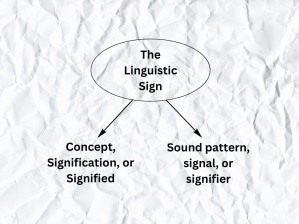
Form and meaning. In language. Let’s take a word. It’s a sign. A linguistic sign. Let’s not get too technical, there is no need for that in the early morning. Linguistic is just language. A linguistic sign is a sign in language. It can be a word. It can be smaller than a word. A meaningful part of it. (Yes, some of you know: it’s called a morph.) It can be larger than a word: a phrase, a sentence, a saying, a paragraph, a text, and yes, a whole novel. Alright back to the word. Like all other signs in language it has form and meaning. The form is material: some ink spilled, a sound wave, dark pixels on your screen. The meaning is not. Not material. This means we cannot sense it. We make sense of it. We cannot hear meaning, we cannot see it with our eyes, we cannot smell meaning, taste it, touch it. We make it. We impute it on the form. It is us who imbue the form with meaning. ChatGPT just gives us forms. Many forms. And quickly. I make the meaning, when I read it. It did not mean anything. (And computer scientists and linguists, AI specialists can tell us that there is a reason for it. But that will have to wait for another post on this blog.) Where were we? The sign. Form. And meaning. More than a hundred years ago, Ferdinand de Saussure told his students that the sign can be drawn as a triangle. An incomplete triangle: the sign on top and nothing at the bottom. Form and meaning at the bottom corners of the triangle and no line – no connection – between them. So, there is no connection between form and meaning? Wrong. There is. Look at the top. The sign. The sign connects form and meaning. And only the sign connects. If the form is not in a sign, it is not connected to meaning. If the meaning is not wrapped in a sign, it has no connection to any form. Who makes these signs? We do. Every day. Every moment. Every time. Every time we use a word or any smaller or larger linguistic sign. It’s use. Meaning is use. The way we use a word, the context we use the word in – that’s its meaning. Alright, it gets quite complex. And ChatGPT can’t do it. Even if Gemini comes to its aid. ChatGPT does not use words (Yes, there is tech behind that, too. Some other time; not that early in the morning). We use the words when we read what the chat says, what it fished out of the Large Language Model. Yes, when we use ChatGPT, we – and only we – make meaning. Conventionally. But conventions is another topic …