

Of course, a language teacher is more than a benevolent conversation partner. In AI, an intelligent tutoring system (ITS) would be more akin to a language teacher than a chatbot would. An ITS consists of three interacting components (see Heift & Schulze, 2007):
- The expert model, which captures the domain knowledge or the information that students should learn;
- The tutor model, which makes decisions about the instructional sequences and steps as well as appropriate feedback and guidance for the group as a whole and for individual students;
- The student model, which records and structures information about the learning progress and instruction received, domain beliefs and acquired information, as well as the learning preferences and styles of each student.
This is part of a draft of an article I wrote with Phil Hubbard. In this paper, we are proposing a way in which teachers can organize their own professional development (PD) in the context of the rapid expansion of Generative AI.
We call this  PD sustained integrated PD (GenAI-SIPD). Sustained because it is continuous and respectful of the other responsibilities and commitments teachers have; integrated because the PD activities are an integral part of what teachers do anyway; the teacher retains control of the PD process.

The full article is available as open access:
Hubbard, Philip and Mathias Schulze (2025) AI and the future of language teaching – Motivating sustained integrated professional development (SIPD). International Journal of Computer Assisted Language Learning and Teaching 15.1., 1–17. DOI:10.4018/IJCALLT.378304 https://www.igi-global.com/gateway/article/full-text-html/378304
Only if the sole learning objective is conversational ability, can one assume that the LLM has elements of an expert model. The other two models, however, cannot be mimicked by a GenAI tool. Consequently, teachers still have to teach – determine instructional sequences, time appropriate feedback, remember and work with an individual student’s strengths and weaknesses – also when using GenAI tools in various phases of the learning process. GenAI tools can provide multiple ideas for engaging learning activities, texts for reading with a ready-made glossary, or drafts of an entire unit or lesson plan. However, it is the teacher who must understand, select, adapt, and implement them. The entire teaching process and its success are still the responsibility of the teacher.
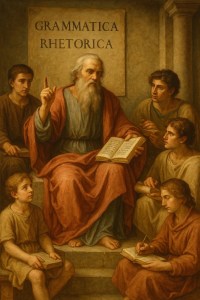
In an educational institution, teachers can meet this responsibility because learners normally trust their expert knowledge, because teachers have been trained, certified, and frequently evaluated. The same is not (yet) true of GenAI tools. They have been trained through machine learning, but their semantic accuracy and pragmatic appropriateness have often been found lacking. The generated text is plausible, but not necessarily factually correct or complete. This way, GenAI output is an insufficient basis for successful learning. This becomes apparent not only when one tries out a GenAI tool in the area of one’s own expertise, but also when one looks back on what teachers have said about the various levels of trustworthiness of internet texts, which also formed the basis for the machine learning for LLMs, for the last thirty years: sources have to be checked and validated. In machine learning for LLMs, the texts and sources are not checked nor validated. This can impact the content accuracy of LLM output. Of course, learners cannot be expected to check the accuracy of information they are only about to learn; believing the truth value of the information is a prerequisite for learning. Critical analysis and questioning the information learnt is always a second step. Also, first studies have emerged that show that GenAI can create the illusion of knowing and thus of learning (Mollick, 2024); consequently, chatbots are not always a tool for successful learning.
The main thing to remember is: these GenAI chatbots are a tool and not a tutor – more like a hammer than an artisan, more like a dictionary than an interpreter, and more like an answering machine (remember those?) than a teacher.
References
Heift, Trude and Mathias Schulze (2007). Errors and intelligence in CALL: Parsers and pedagogues. Routledge.
Mollick, E. (2024). Post-apocalyptic education: What comes after the homework apocalypse. https://www.oneusefulthing.org/p/post-apocalyptic-education
Discover more from Panta Rhei Enterprise
Subscribe to get the latest posts sent to your email.
Share this:


 Panta Rhei Enterprise
A chatbot chats and its words can glitter,but it can’t quite teach; it can’t be fitter.It knows some facts, can feign a plan,yet won’t read you the way a teacher can. It drafts a unit, spins a scene,makes glossy “truth” from in-between;but sequence, judgment, timely cue…that craft still rests in human hands: in you. So use it well, let tools assist,but don’t mistake the tool for gist:GenAI’s bright, fast, wide in scope, but only a hammer’s help, not a mentor’s hope.
https://parenting-support.net/ https://youtu.be/iGL9Y2tTr5o?si=DhsGCb4PIkFGTmiW Confidentiality Notice: This transmission (and/or the attached documents) may contain confidential information belonging to the sender, which is intended solely for the named recipient. Content is copyrighted. If you are not the named recipient, you are hereby notified that any unauthorized use, disclosure, duplication and/or distribution of the following contents is strictly prohibited. If you have received this transmission in error, please notify us immediately. Thank you.
LikeLiked by 1 person